Energy Interdependence- You Ready?
Imagine This…
Imagine you could participate in a marketplace where neighbors generated, bought, and sold energy with one another from their mobile phone? Here’s the scenario:
While watching your daughter’s soccer practice, you get a notification that reads, “You generated $26 of credits this month trading 226 kWh with your neighbors. Click to manage your credit.”
That reality is not a future-state. It’s available today and its challenging the status quo. In the following article, I provide an overview on how energy is generated and delivered, plus a proposal to enable energy sovereignty.
The Future is Bright
When I was a boy, I was immersed in the benefits of solar energy, both passive and active. I lived in a home that was filled with a tightly integrated ecosystem of technologies which my father, an architect, had designed. The house was viewed as a living organism whose infrastructure worked together to deliver wonderful efficiencies. Photovoltaic panels (PV) covered the southern roof faces, as one would expect. However, the house contained several other core features that layered on top of one another to create real systemic efficiencies.
Let me explain.
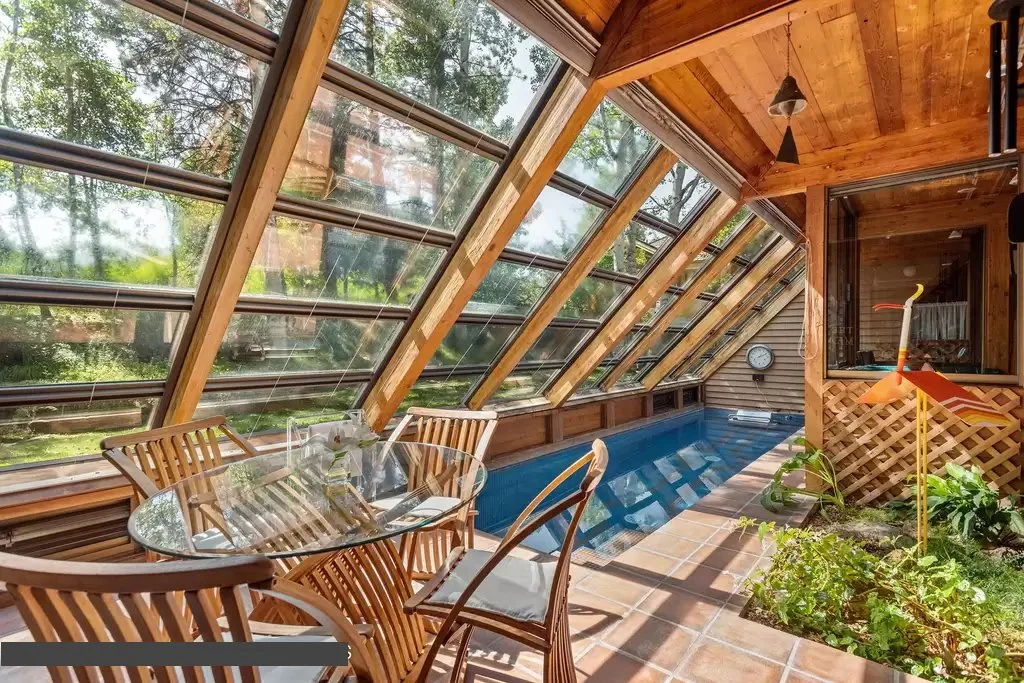
The waters of the lap pool served as the primary heating element.
At the center of the home, was a lap pool housed in a solar atrium / green house whose waters were heated via an exterior thermal wall. Beyond the recreational benefits, the water remained delightfully warm throughout the year creating much needed moist air that moved about the house. A clever feature pumped this same water under the tile floors to serve as the primary heating element.
Skylights in the communal living spaces had louvers which opened and closed based on exposure to sunlight. Gas contained in a tube on one side of the louvers would warm in the morning sun, rise up into a second tube to displace the weight, opening the skylight and allowing sunlight to stream in. Come evening, the gas would cool, sink, and reverse the process, keeping the warm air of the day contained within. A brilliant passive system using natural thermo-dynamics.
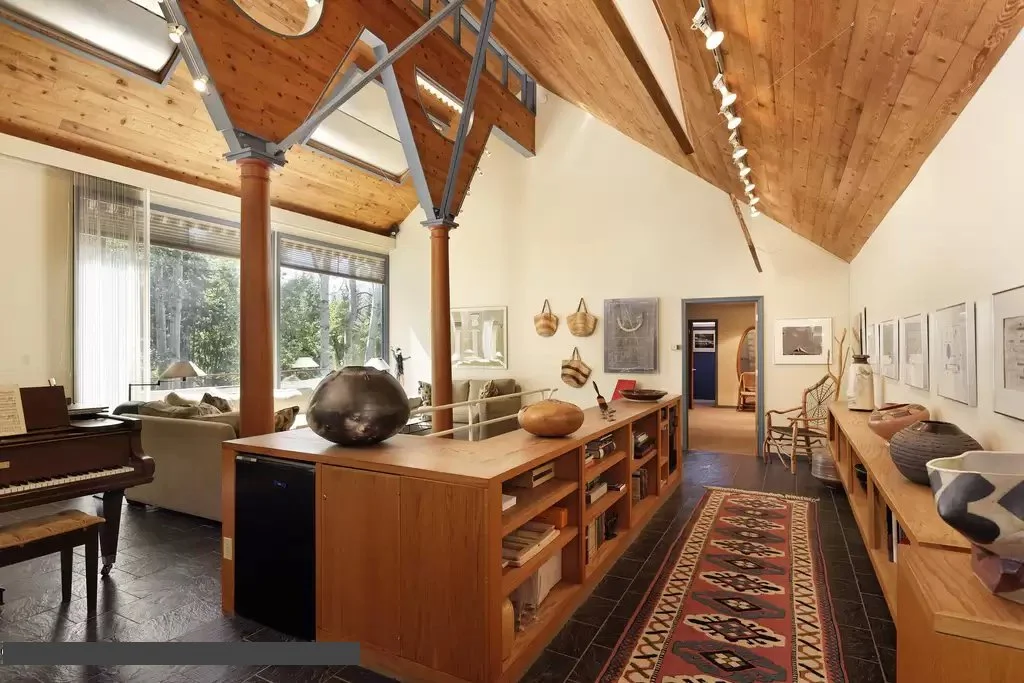
Primary living room with skylights closed.
A reflection of my father’s sense of humor and of the optimistic ethos that the future will be bright was found in a cryptic message. On open/close switches that controlled the insulated curtains, a small line of text read, “NRG42MRO.” If one cared to puzzle over it, you would learn the architect felt this was just the beginning.
A Changing Model
This magnificent, living house was one of three that my father designed, each with their own variations on emerging solar technologies, mostly passive in nature. The primary focus was on reducing consumption and increasing conservation. Fast forward almost 50-years and we can now address our relationship with energy at another level. Beyond creation, we can participate in the sale and distribution.
Up to this point in the electricity industry, the model we’ve existed under has been a one-way relationship as shown in the diagram below. It’s a model Thomas Edison and Nikola Tesla would be familiar with.
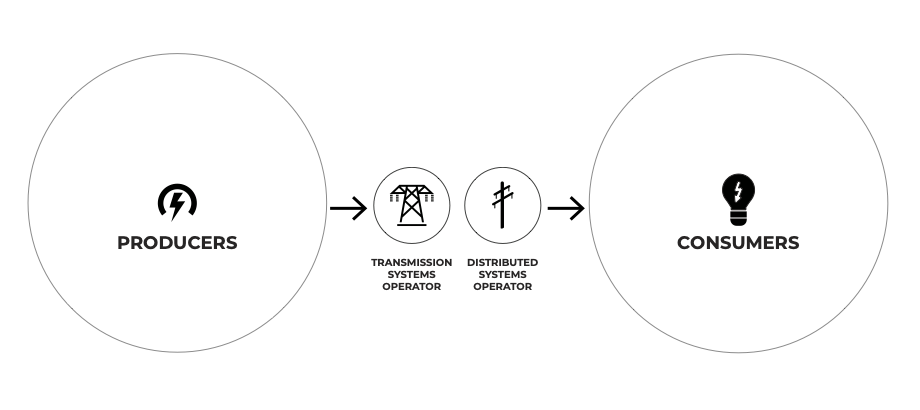
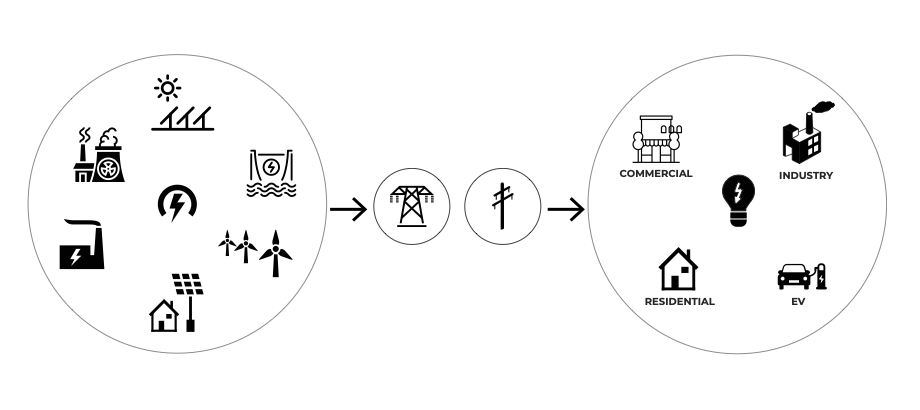
On the producer side, a heat source (coal, natural gas, nuclear, etc.) boils water which creates steam to move a turbine and generate electricity. Electricity is generally not stored but pushed out on long distance, high powered tension lines via the TSO or transmissions systems operator. This is then picked up by a local DSO, or distributed systems operator, who delivers the electricity to your home.
On the consumer side, we have an electrical meter that monitors our usage, turns in one direction, and bills us according to the costs plus margins of the above infrastructure. It’s the model we’ve all grown up with and tend not to think much about, until we do.
Grid-Tied
Over the last twenty years, residential photovoltaic production— PV panels— has been adopted en masse. With the help of government subsidies, many home owners can participate in the Grid’s energy mix by contributing renewable sources. This has the satisfying impact of decreasing the percentage of fossil fuels that have traditionally been the lion’s share of our energy sources.
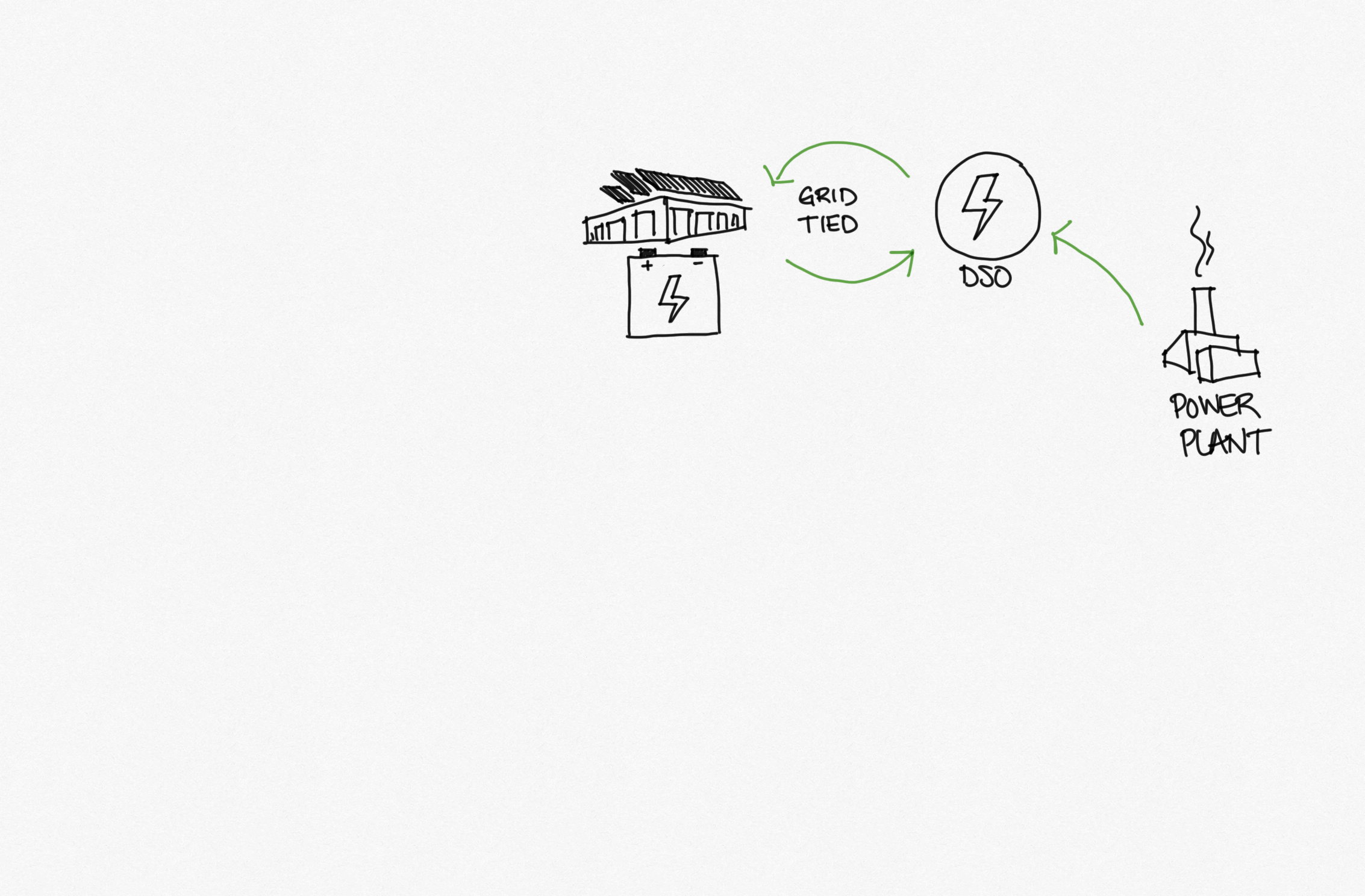
When you own or lease solar panels on your home roof, you are generally tied into the old model with the difference being you are now a producer AND consumer of energy. You generate power that flows out through your meter and up to the local utility grid. You are credited for how much you generate and, theoretically, your production benefits your neighbor, community, and the planet. In this model, the utility company remains at the center of the web. Even though you generate energy, you don’t “own” that energy. You are a node in the network and remain grid-tied.
Grid-tied systems make owners of solar panels both a consumer and producer = “prosumer”
Grid-Tied vs Local Storage
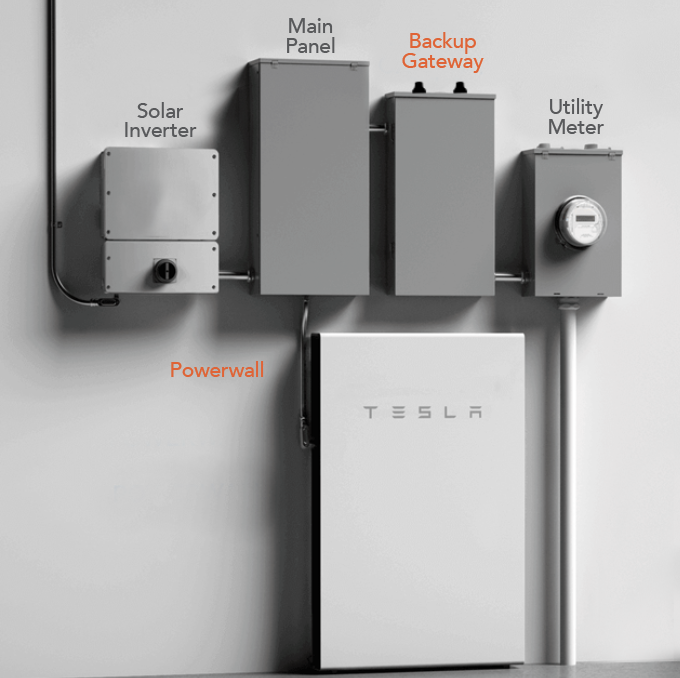
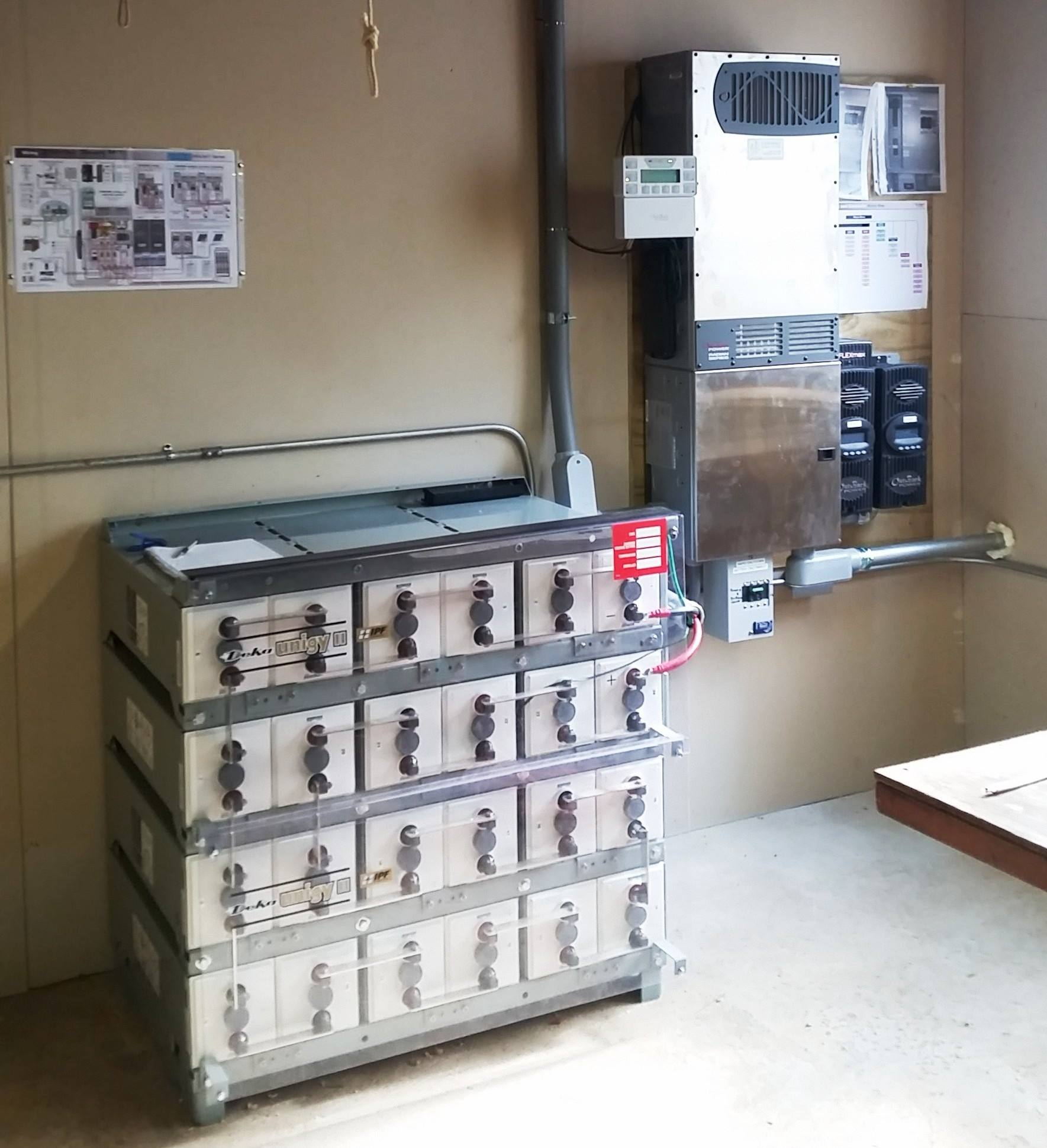
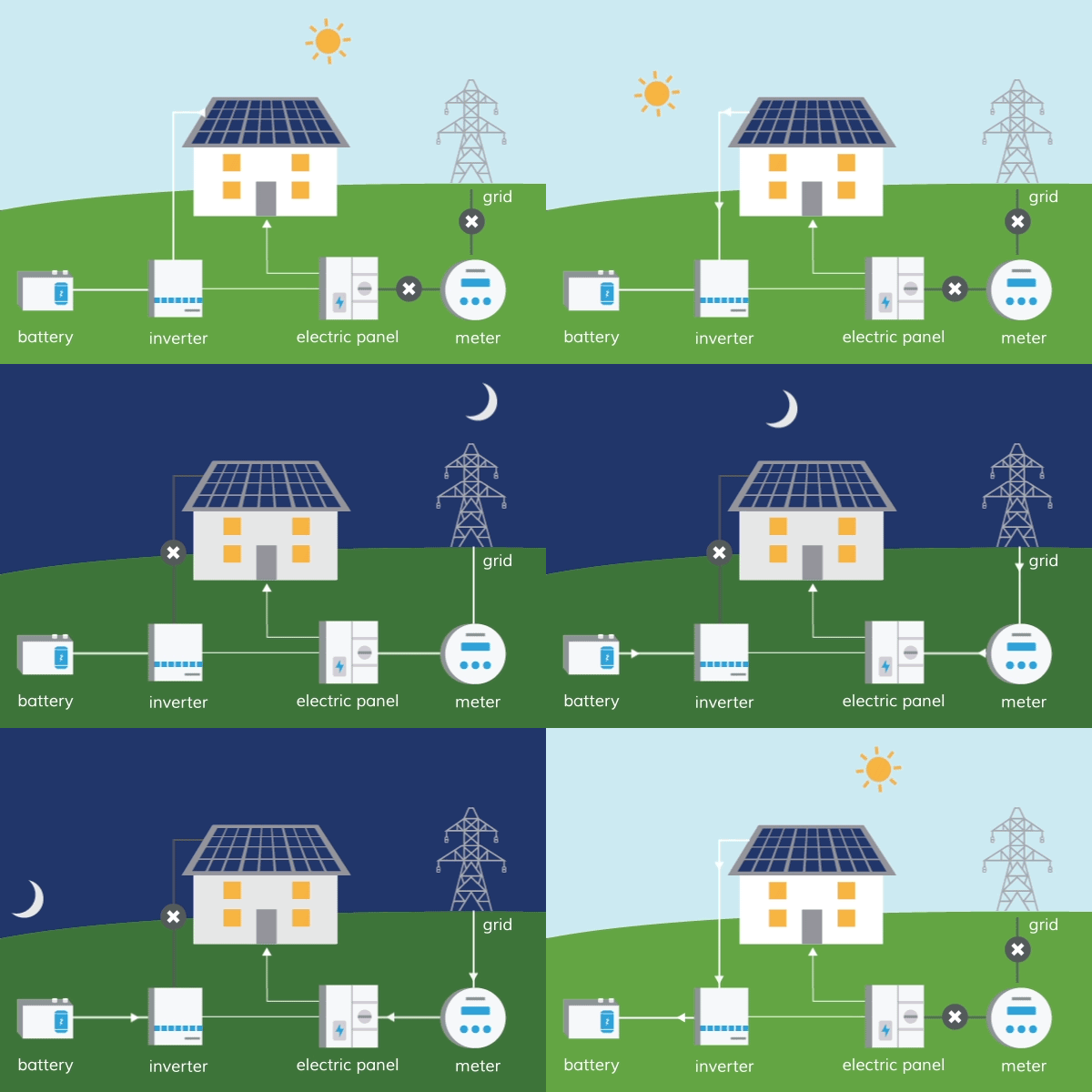
Another emerging model is to establish a bit of independence without losing your connection to the grid. Instead of pushing all the energy your solar panels create upstream, you store it on your premise using batteries. The solar panels charge the batteries during sunny days allowing you to draw from them at night or on cloudy days. Since you are still tied to the grid any excess energy capacity is pushed out to your utility and the regional grid. Excess needs (determined by how much battery storage you install) are supplied by your utility.
It’s a really nice system and an evolution enabled by battery technology.
Energy Interdependence
The Arrival of Micro-Grids
Finally, we arrive at the most exciting developments of the last five years — local production and local distribution. We now have the ability to enjoy true energy inter-dependence.
Energy independence suggests going completely off-grid and being self-sufficient. That is possible if you have the money to power a single family residence or very limited needs, like a cabin in the woods. What may be more feasible, is building a self-managing network in coordination with your neighbors, creating interdependence. It’s a “we’re stronger together” model. It’s growing. It’s an area ripe for adoption by any HOA or community.
So how does it work? This model is enabled by an efficient PV capture, storage, and demand system, plus the emergence of blockchain technologies. Ventures outside the U.S. have had success implementing such models at scale. Powerledger is one such company.
But wait, blockchain?! Isn’t that synonymous with crypto-currencies? Nope — they’re not the same.
If you don’t know the difference, read this post from 2019. Blockchain is an underlying technology that allows for a host of new benefits, one of those being digital money. In a micro-grid model, blockchain facilitates peer to peer transactions that require data integrity, in other words, the information exchange is accurate, tamper-proof, and facilitated by a smart contract. Smart contracts writing to the blockchain remove the use of a middleman to monitor, track, and capture that data and corresponding payments. This translates to automated trust and lower fees.
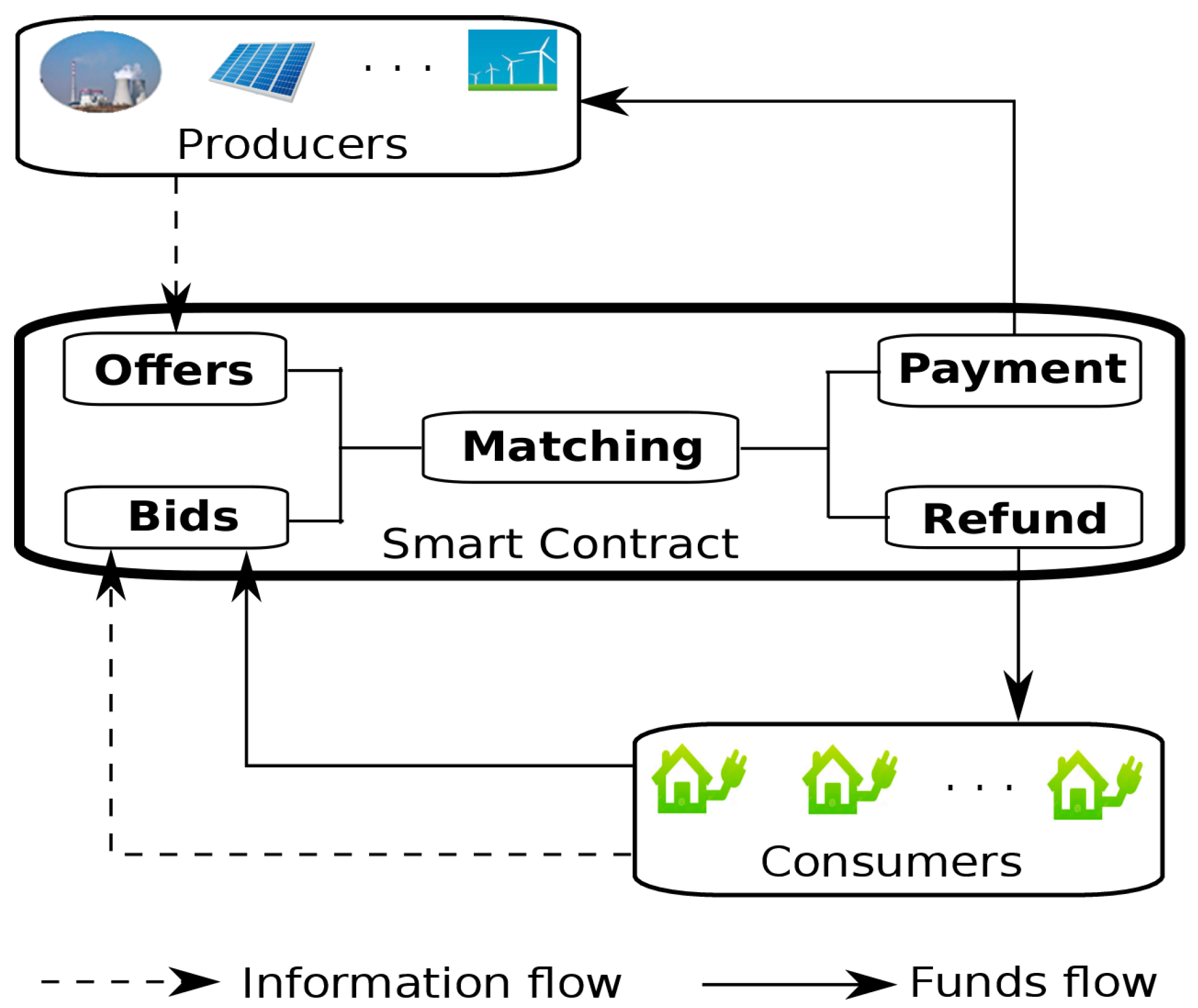
A basic flow that illustrates the role of a smart contract in an energy marketplace
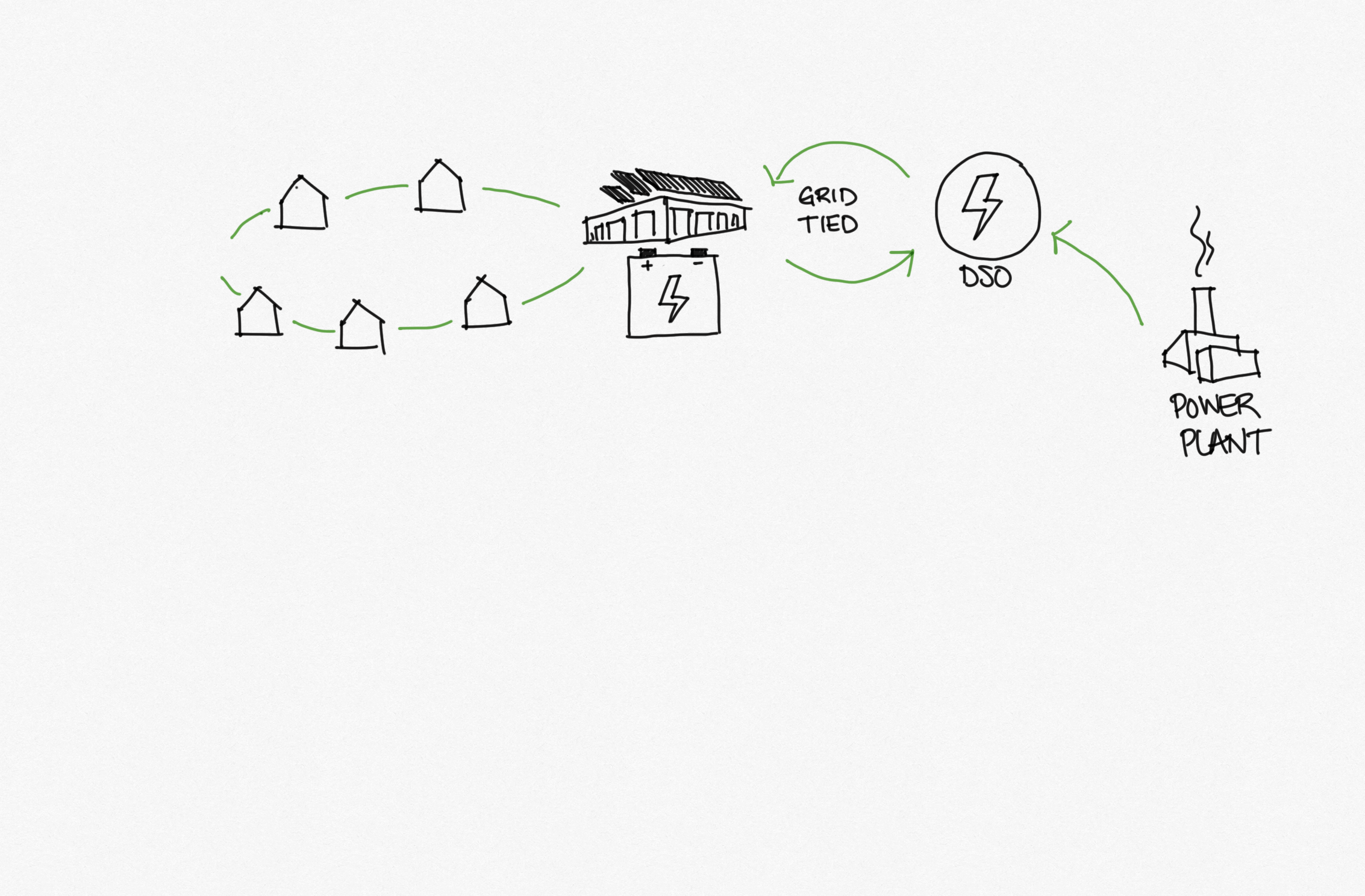
So, back to micro-grids… This label is used to describe a community of homes, office buildings or a campus that produces and stores electricity, as well as sells or trades it with neighbors. That last bit is the key. No longer must they utilize a hub and spoke model with the utility company playing the gatekeeper for a fee. Instead, the local network is daisy-chained (in the case of multiple producers) and/or shares the surplus. This model has been put into operation around the world, often in less affluent areas. I would hazard a guess that those “other” areas are easier to service than the overly regulated U.S. market primarily due to entrenched incumbents with the lobbying power to resist change.
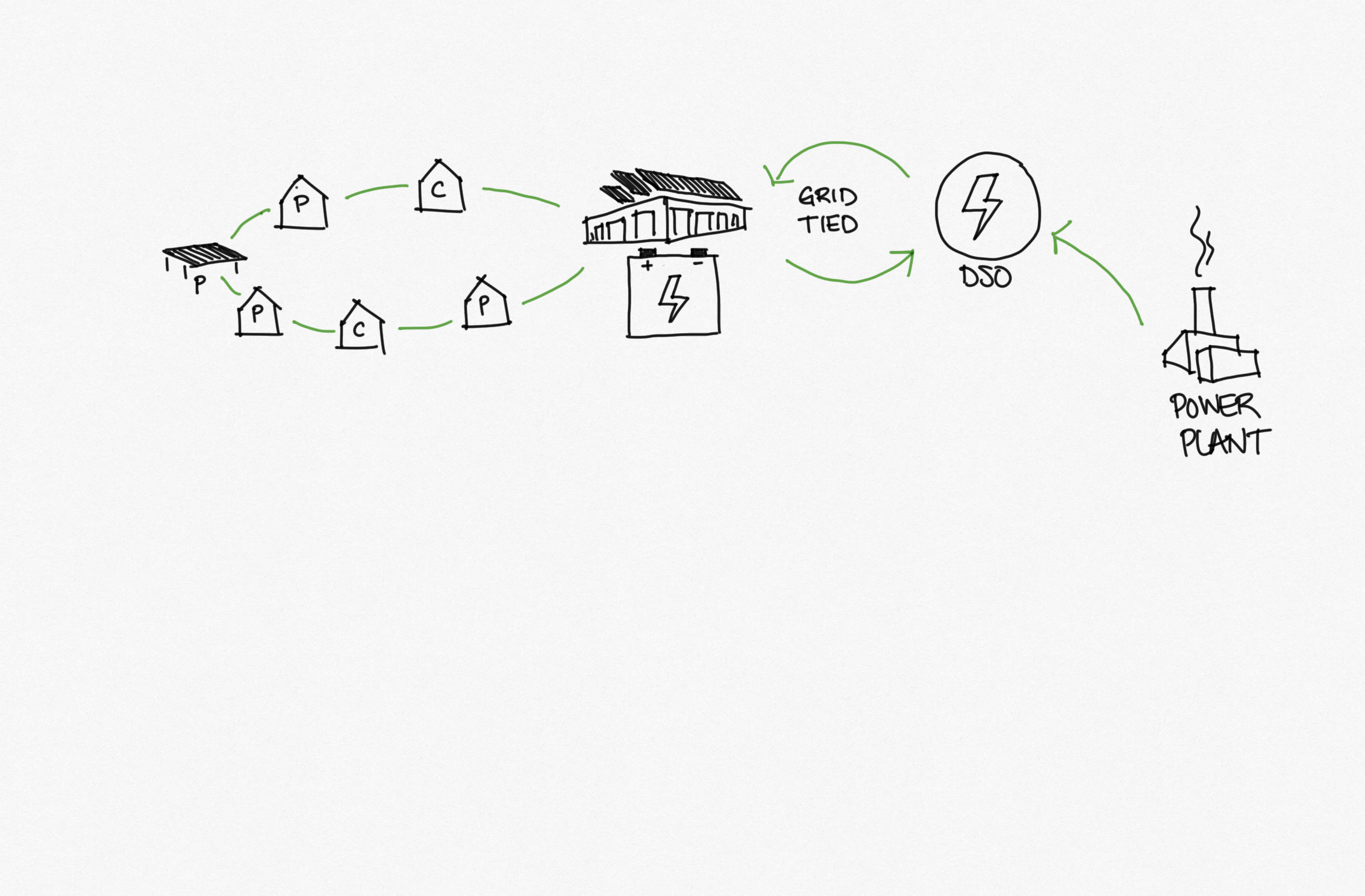
In the Micro-grid model, people become “prosumers”— both producers and consumers — within a local, connected network. They connect into a marketplace for their energy. There, oracles help establish a price for buyers and sellers to trade.
Energy is run through a smart meter gateway to capture supply and is freely traded in the marketplace before moving back into the private micro-grid or out into the public grid.
Emerging Opportunities
The architecture and the prototypes for micro-grids have now been worked out. The Brooklyn Microgrid was the first I learned about in 2019, which successful united a group of homeowners to support local solar energy production, install the infrastructure, and create a marketplace.
Participants access the local energy marketplace through the Brooklyn Microgrid mobile app. In the app, people can choose to buy local solar energy credits. Prosumers sell their excess solar energy to the marketplace where consumers purchase the available solar via auction.
This prototype was the training grounds which gave birth to a for-profit company, LO3 Energy, who sets up micro-grids with a focus on distributed energy resources, aka DER.
Commercial Application
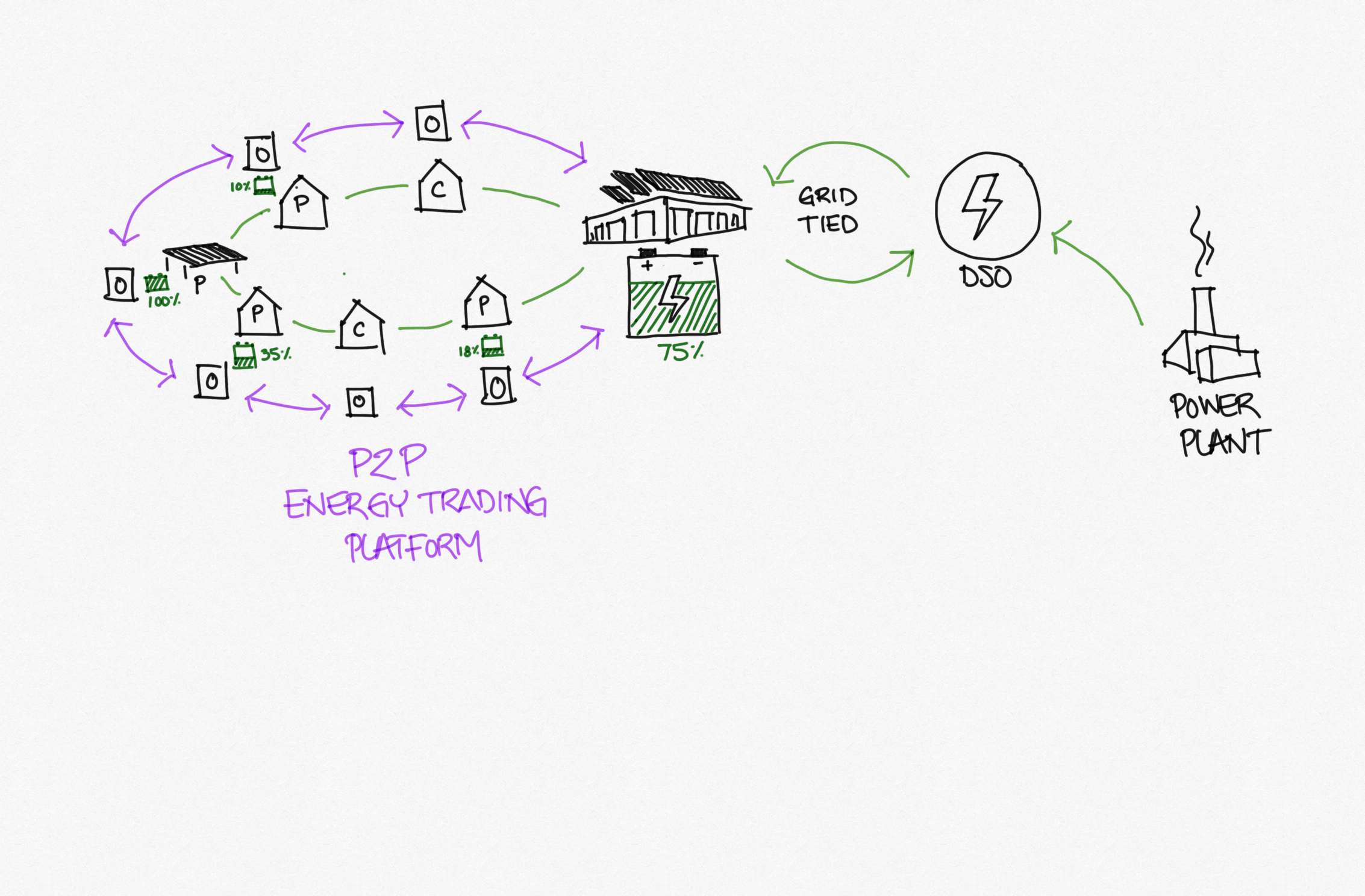
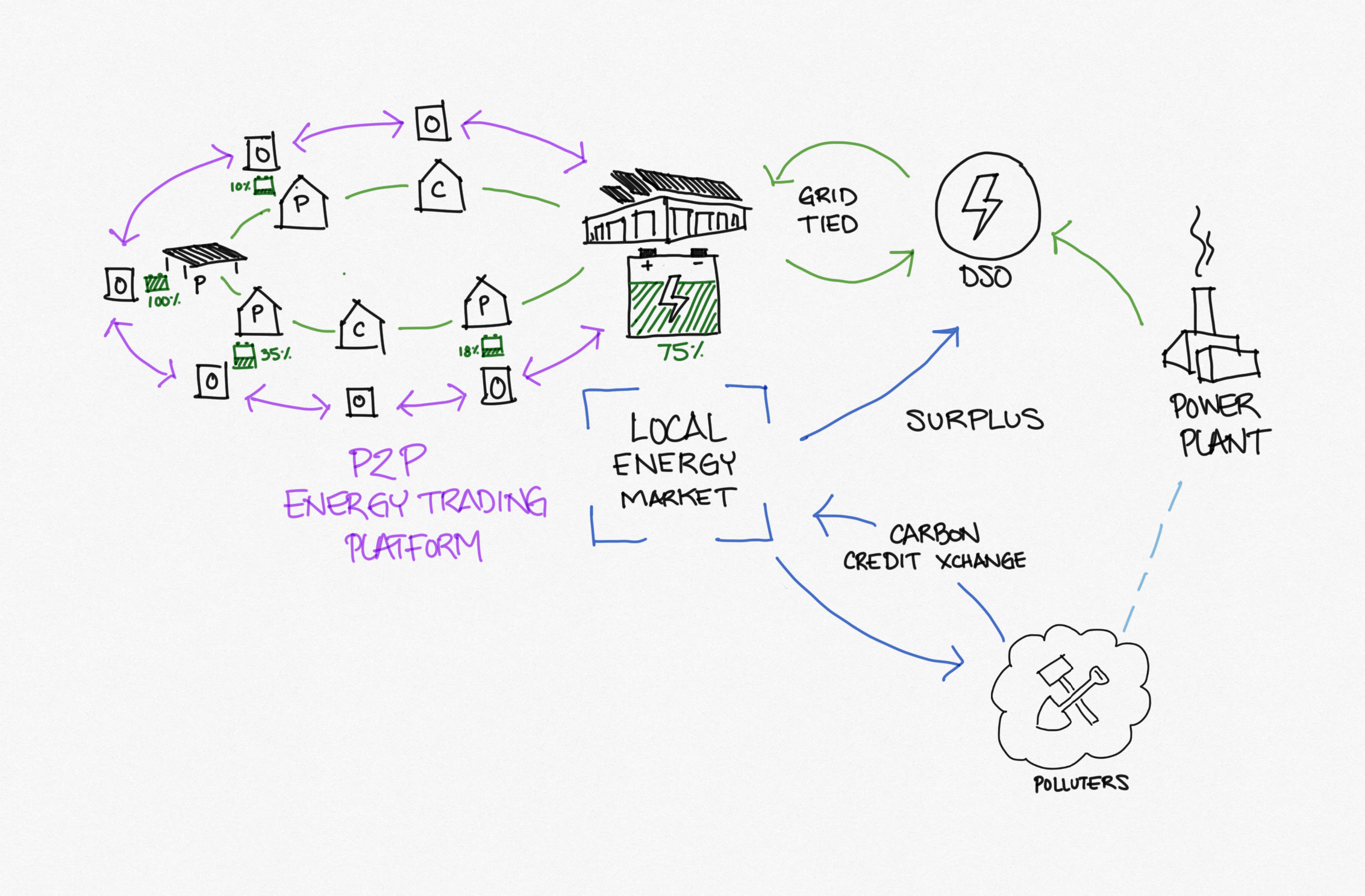
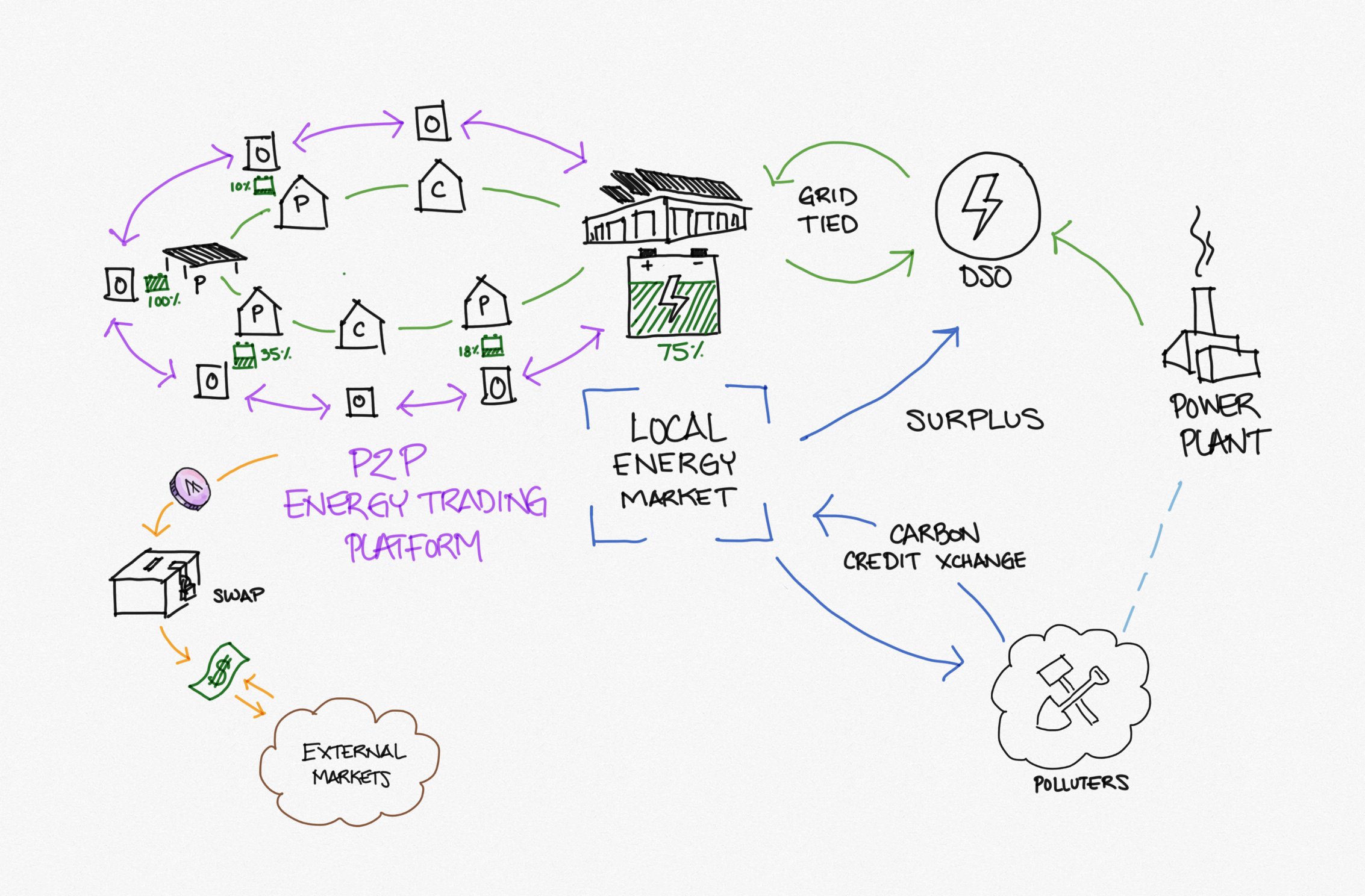
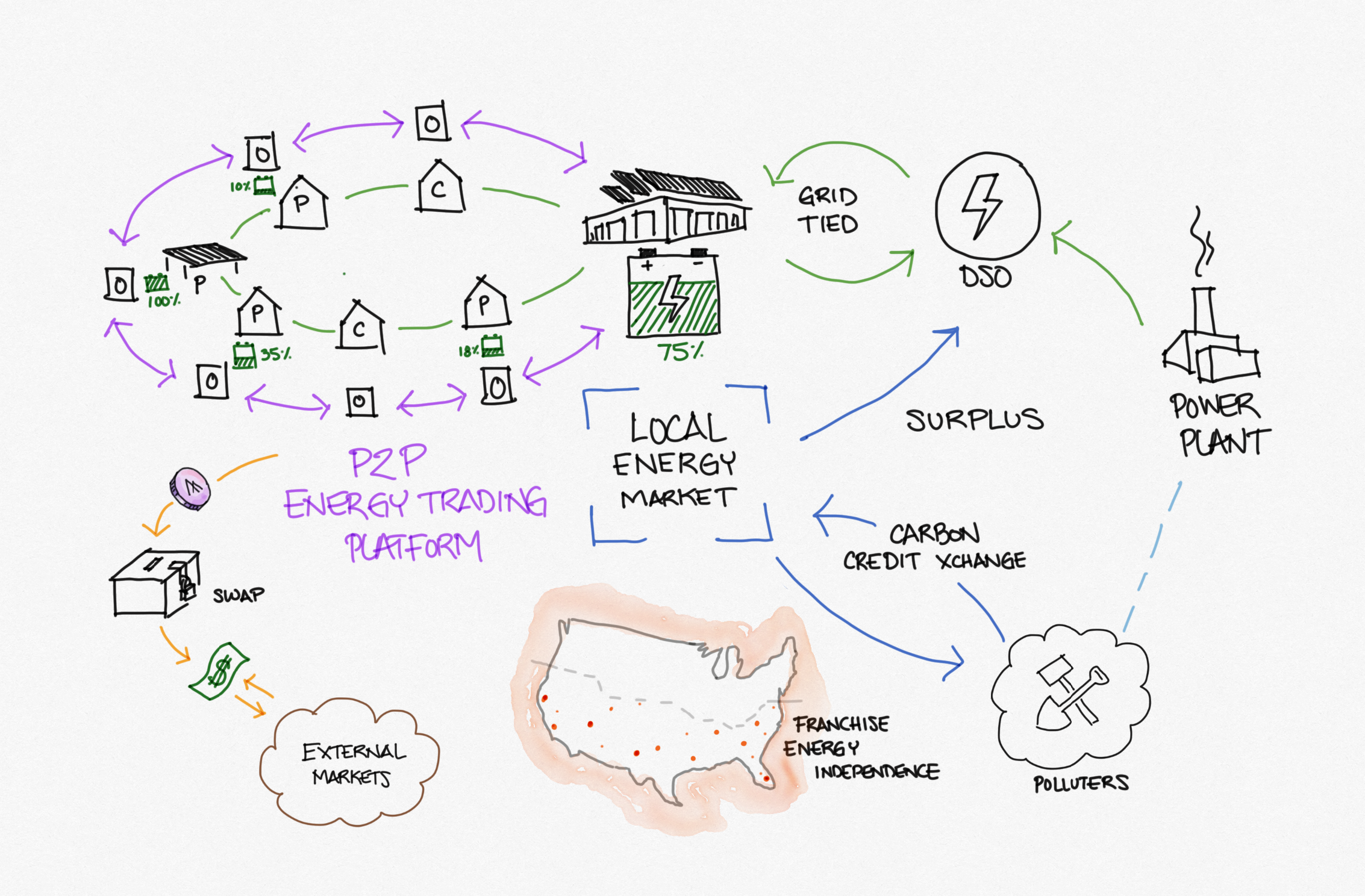
In 2021, I began speaking with a friend who owns a commercial real estate asset management company. We imagined a future state where they implemented DERs on all their properties. In this model, they would use a portion of their acquired buildings to install a solar array and battery storage. Some of their properties have low energy needs due to the type of tenant. Theoretically, those properties would generate excess power to be sold or even traded with the surrounding neighborhoods.
Like the Brooklyn Microgrid project, the company would then create an independent local energy marketplace where residents could both contribute and/or purchase energy, preferably at a discount. This would be a win for everyone — the building creates a more robust local economy, increasing the building value, and benefiting the community with a more resilient neighborhood.
Below are my initial sketches for the architecture of the concept. These were used to ground our conversation and find agreement. It’s the beginnings of a plan.
Imagine It. Create It.
Energy is critical to all aspects of our lives. It is currently controlled by centralized, for-profit companies whose vulnerabilities become ours. Volatile market conditions, global politics, supply and demand, technology hacks, and cronyism have tangible impacts on each citizens daily existence. The world needs balanced, equitable frameworks to achieve energy interdependence in the form of micro-grids.
The energy markets are changing, but generally from a ground up, grassroots level. It’s time we all got on board by first comprehending the infrastructure that generates and delivers the goods and services we enjoy. If we make visible the invisible and shine a light on how things work today, we can re-imagine what is possible for tomorrow. Let’s lobby for a better system.
As my father proposed, its time we embrace NRG42MRO.